Sudanese civil war (2023–present)
Ongoing civil war between SAF and RSF in Sudan.

various · CC BY-SA 4.0
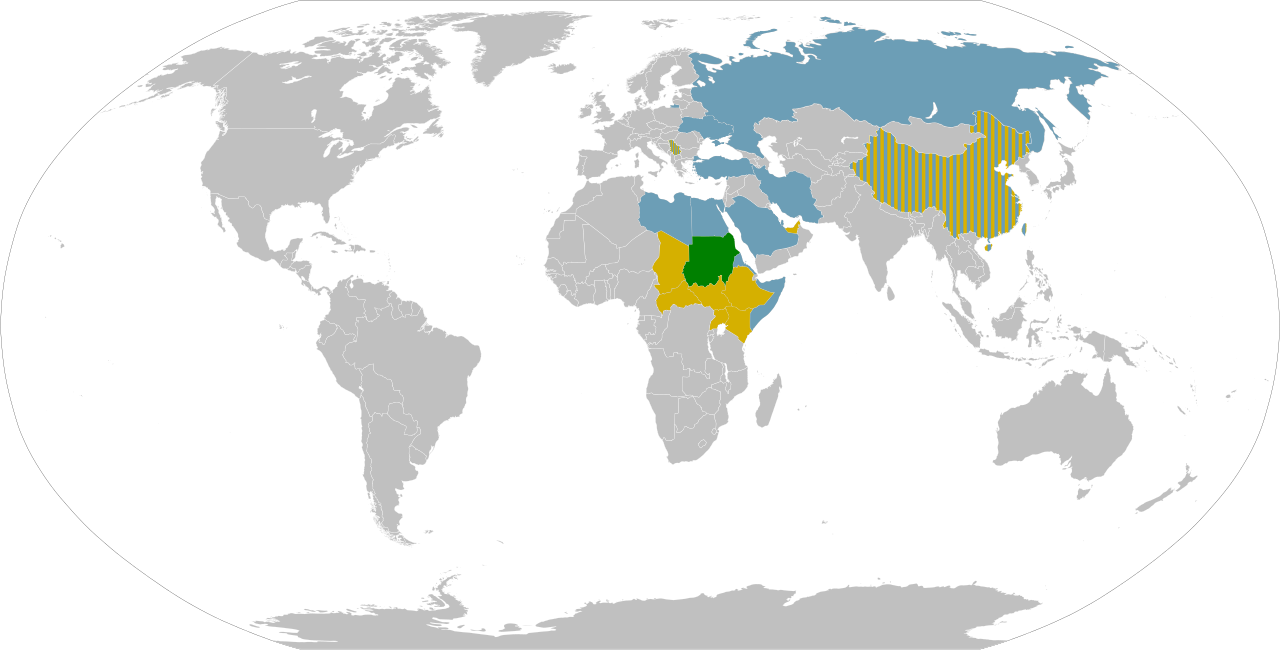
The conflict has drawn in foreign powers including Russia, Turkey, Saudi Arabia, Iran, Egypt, Ethiopia, and the United Arab Emirates, and has been marked by severe humanitarian consequences, widespread famine, and allegations of genocide.
- combatants
- Sudanese Armed Forces (SAF) vs. Rapid Support Forces (RSF)
- leaders
- General Abdel Fattah al-Burhan (SAF); General Hemedti (RSF)
- displaced
- Over 14 million forcibly displaced, 4.5 million refugees (as of 6 July 2026)
- location
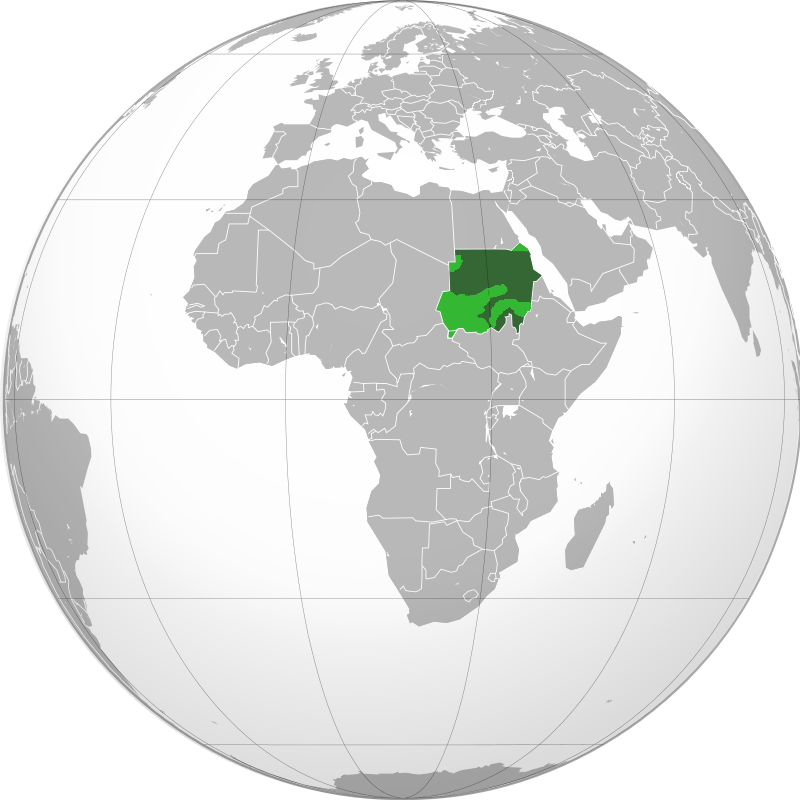
- Sudan, primarily Khartoum, Darfur, Kordofan, Gezira
Lore & Background
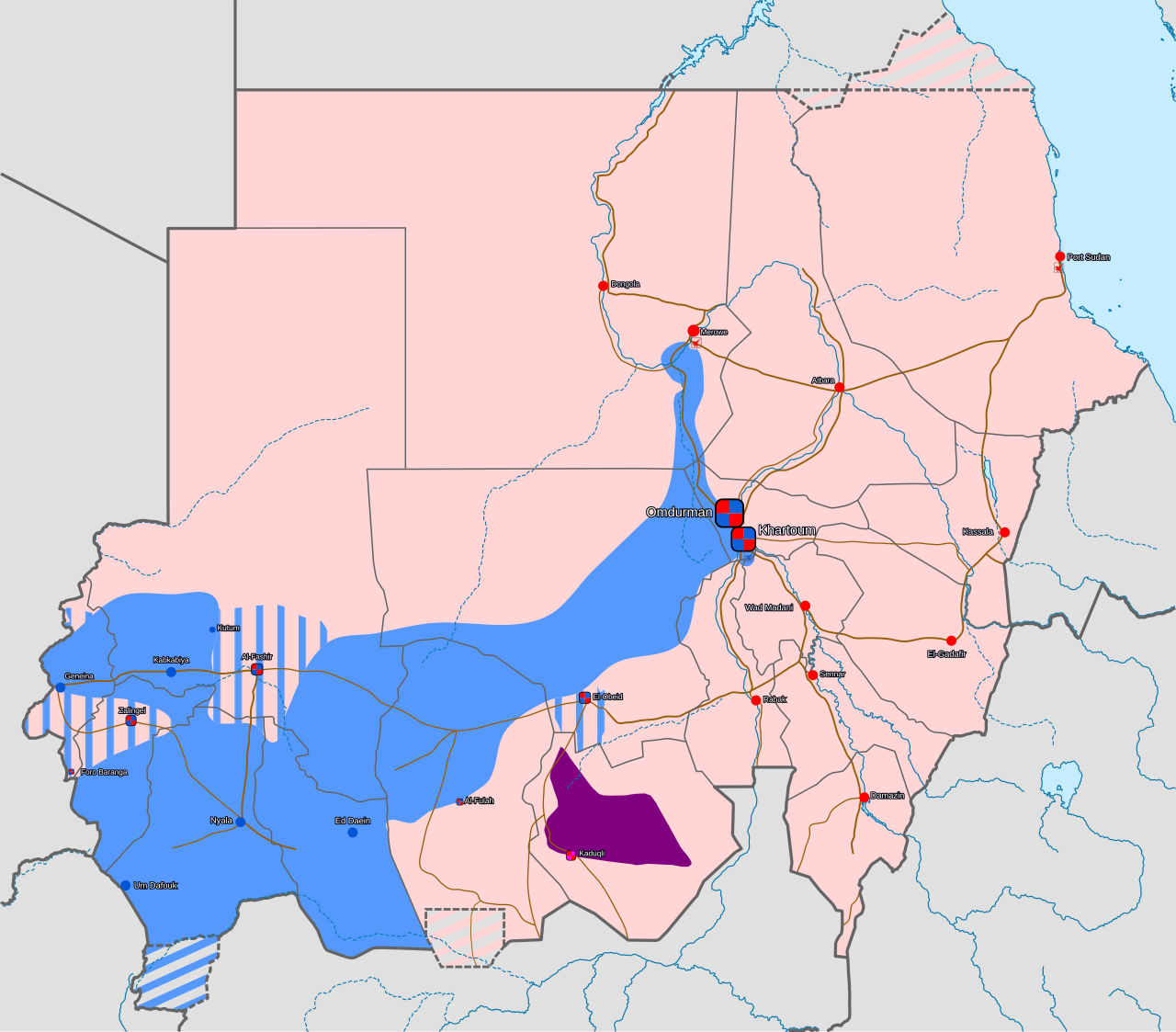
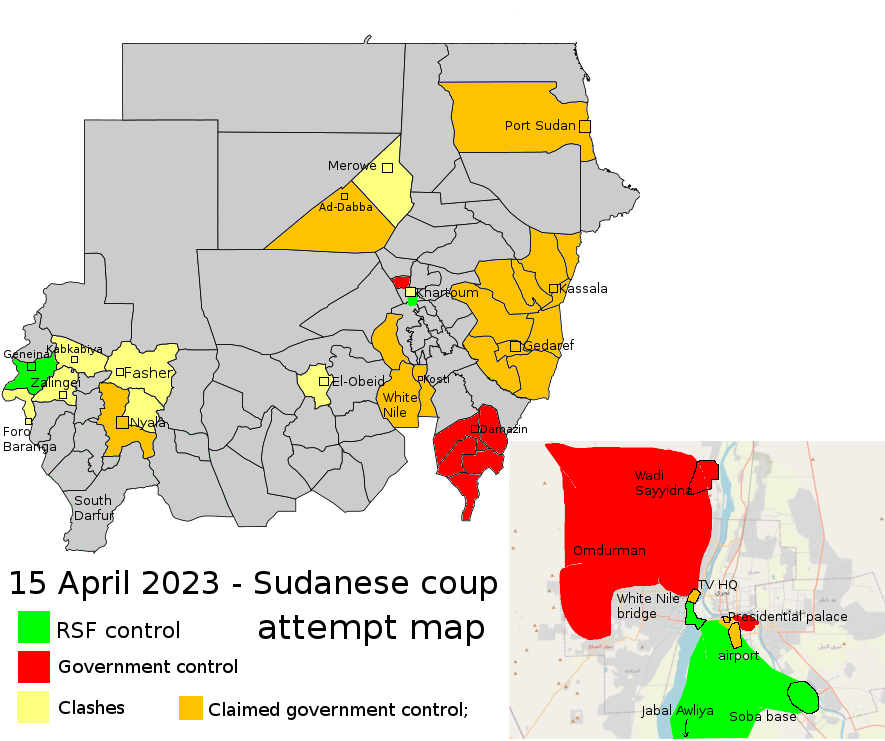
Initial RSF attacks targeted government sites in Khartoum and other cities, leading to the Battle of Khartoum. The capital region became divided, and al-Burhan relocated his government to Port Sudan. Various rebel groups joined the conflict: the SPLM–North attacked the SAF in the south; the Tamazuj movement joined the RSF; and the SAF gained support from factions of the Sudan Liberation Movement and Justice and Equality Movement.
Reader's Guide
The Sudanese civil war has had devastating humanitarian and regional impacts. The conflict has caused widespread famine, with 25 million people suffering severe food insecurity and 4 million children acutely malnourished. Foreign involvement, particularly UAE shipments of Chinese weaponry to the RSF in violation of sanctions, has prolonged the war. The crisis has led to the near-collapse of infrastructure, education, and healthcare, with Darfur described by a UN official as the 'epicenter of human suffering in the world.'
Did You Know?
- The UAE has been found to violate sanctions by shipping Chinese weaponry to the RSF, which largely funds its operations through gold exports to the UAE.
Roots in Decades of Instability
Sudan's path to the 2023 civil war stretches back to its 1956 independence, when the country entered a cycle of chronic political fragility punctuated by twenty coup attempts and long stretches of military governance. Two devastating civil wars against the southern regions between 1955 and 2005 claimed an estimated 1.5 million lives and ultimately produced the secession of South Sudan in 2011. In the west, the Darfur conflict that erupted in 2003 under President Omar al-Bashir displaced millions and killed over 200,000, with the state relying on Baggara Arab militias known as the Janjaweed to suppress non-Arab tribal uprisings. In 2013, al-Bashir formally reorganized those militias into the Rapid Support Forces under General Hemedti, a unit that would go on to commit mass killings, rape, and ethnic cleansing against the Fur, Masalit, and Zaghawa peoples, drawing ICC indictments for genocide and war crimes. The 2021 military coup created a transitional administration, but unresolved tensions over folding the RSF into the national army set the stage for open warfare on 15 April 2023.
Shifting Fronts and the Battle for the Capital
The war opened with RSF strikes aimed at government installations in Khartoum and other cities, igniting the Battle of Khartoum before combat spread westward into Darfur. The capital region was split between the two camps, forcing General al-Burhan to relocate his internationally recognized government to the port city of Port Sudan. Smaller armed groups quickly entered the fray: the SPLM–North opened a southern front against the SAF, the Tamazuj militia aligned with the RSF, and factions of the Sudan Liberation Movement and the Justice and Equality Movement threw their weight behind the army. By late 2023 the RSF had seized most of Darfur and pushed into the capital, Kordofan, and Gezira. The SAF then clawed back ground in 2024, recapturing Omdurman and retaking Khartoum by March 2025. Yet the RSF's grip on western Sudan held firm, and the siege of El Fasher—the army's last Darfur stronghold—began in April 2024 and ended only when the city fell in late October 2025. Despite multiple negotiation rounds, no durable ceasefire has taken hold.
A Humanitarian Catastrophe Without Precedent
The human cost of the war has been staggering. By mid-2026 more than 14 million people had been forcibly displaced, with 4.5 million crossing borders as refugees in what has become one of the largest displacement crises of the modern era. Twenty-five million Sudanese face severe food insecurity, and famine has been confirmed in multiple regions. Four million children suffer acute malnutrition, of whom 770,000 are at imminent risk of death. Hospitals have closed en masse, disease outbreaks spread unchecked, and humanitarian supplies are looted. In Khartoum State alone, 61,000 people have perished, 26,000 of them direct victims of violence, while sexual violence has been reported widely. The fall of El Fasher on 26 October 2025 brought what experts describe as a genocidal massacre, with estimates ranging from 60,000 to 70,000 dead and satellite-based figures reaching 150,000—the largest single massacre of the twenty-first century. UN under-secretary Tom Fletcher called Darfur the 'epicenter of human suffering in the world,' and half the national population now requires urgent assistance.
Foreign Entanglements and the Question of Accountability
The conflict has drawn in a web of external actors. Russia, Turkey, Saudi Arabia, Iran, Egypt, Ethiopia, and the United Arab Emirates have all exerted influence, while spillover from wars in the Central African Republic, Chad, and Libya has further complicated the picture. The 2023 Jeddah Declaration and subsequent diplomatic efforts failed to halt the fighting. The United States, United Kingdom, European Union, and Canada imposed sanctions on entities tied to both factions over ceasefire violations and rights abuses. Despite official denials, the UAE was found to be breaching those sanctions by shipping Chinese-made weaponry to the RSF, a group that largely finances its operations through gold exports to the Gulf state. On 7 January 2025, the US government formally determined that the RSF and its allied militias had committed acts of genocide, a finding that followed years of ICC indictments against RSF leadership for war crimes and crimes against humanity. International calls have grown louder for an end to arms flows, stronger legal protections for aid workers, and meaningful refugee support.
Gallery
Frequently Asked Questions
Why is the Sudanese civil war (2023–present) considered significant in the broader context of African conflicts and colonialism?
It is one of the largest displacement crises of the 21st century and has pulled in multiple foreign powers—Russia, Turkey, Saudi Arabia, Iran, and others—turning a domestic power grab into a proxy battleground. Its roots in a post-colonial state structure where the military has long dominated politics make it a stark case study in how colonial-era institutions continue to shape conflict across the continent.
More in African Conflicts And Colonialism 1-17
Spotted an error? Know more?
This is a living reference — every entry is fact-audited, and reader corrections feed straight into our audit queue. Suggest an edit · See this site's audit record