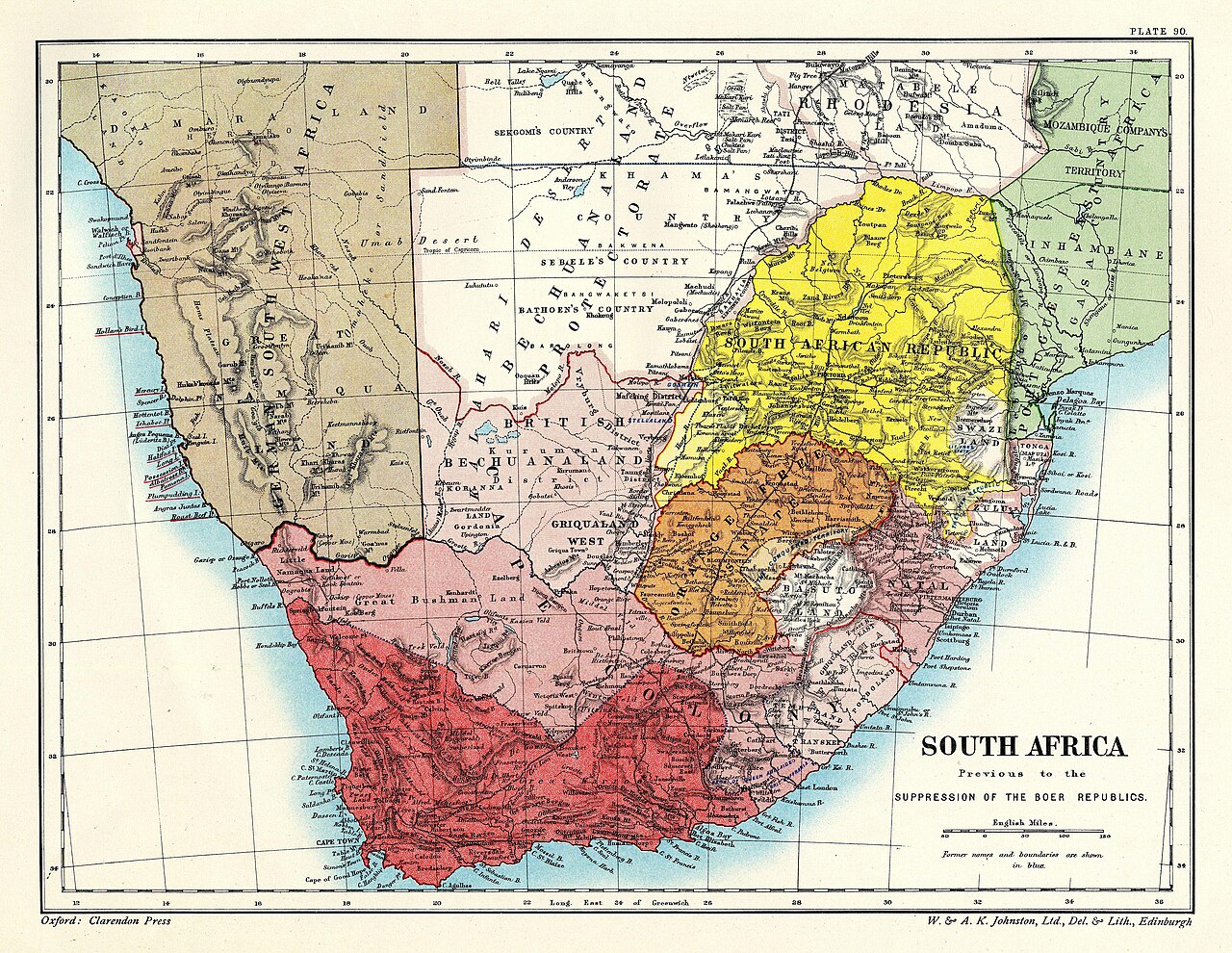
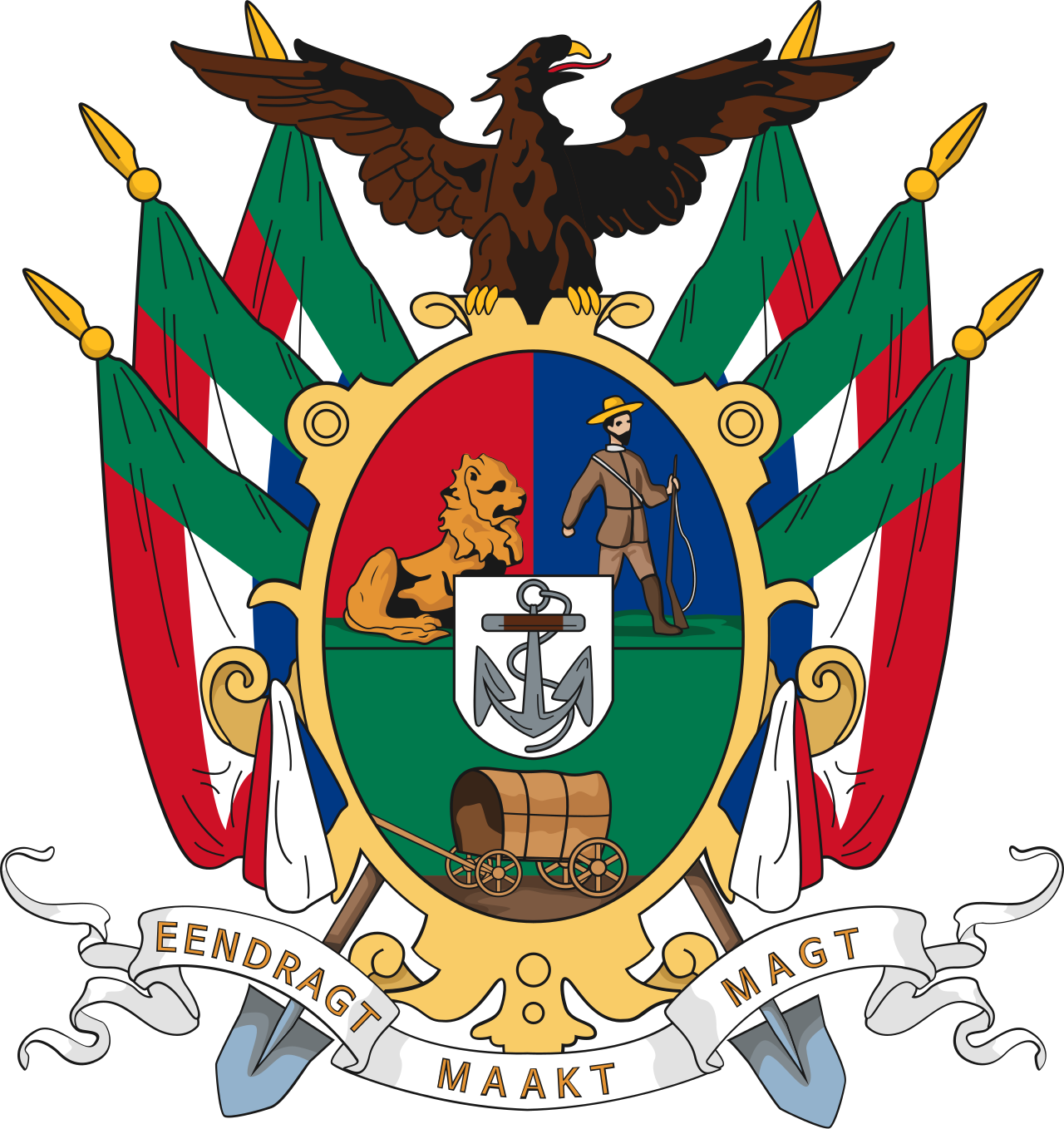
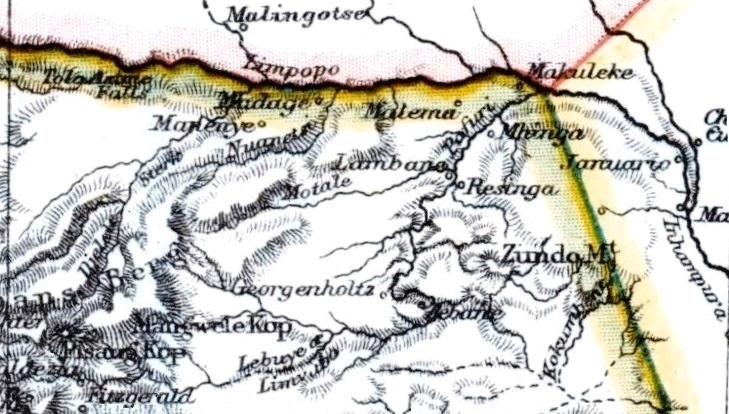
South African Republic
Independent Boer republic annexed after the Second Boer War.

via Wikipedia: Africa · see source
- field
- Independent Boer republic
- nationality
- Boer (Afrikaner)
- known_for
- Resistance to British expansion; First and Second Boer Wars
Lore & Background
The parliament, the Volksraad, had 24 members.
Reader's Guide
The South African Republic's significance lies in its role as a symbol of Boer independence and its central place in the conflicts that shaped modern South Africa. The Treaty of Vereeniging ended the war and transformed the ZAR into the Transvaal Colony, later part of the Union of South Africa. The republic's legacy includes a failed attempt at resurrection during the Maritz rebellion in World War I, and its former territory now comprises parts of Gauteng, Limpopo, Mpumalanga, and North West provinces.
Did You Know?
- The first president of the ZAR was Marthinus Wessel Pretorius, son of Boer leader Andries Pretorius.
Demographic Momentum and Economic Paradox
Africa stands as the world's second-largest and second-most populous continent, home to nearly 1.4 billion people whose collective youth sets it apart from every other landmass. In 2012 the median age stood at just 19.7 years, a stark contrast to the global figure of 30.4, and projections indicate the population will surpass 3.8 billion by the end of this century. Yet this extraordinary demographic energy coexists with a troubling economic reality: Africa remains the least wealthy inhabited continent on a per-capita basis and ranks second-least wealthy in aggregate terms, trailing only Oceania. Scholars point to a tangled web of causes—geography, climate patterns, corruption, the legacy of colonialism, Cold War interventions, and ongoing neocolonial dynamics. Paradoxically, the same continent that struggles with concentrated poverty also nurtures many of the world's fastest-growing economies, suggesting that its demographic youth and resource base hold transformative potential that has yet to be fully realised.
Geographic Position and Political Architecture
Spanning roughly 30.3 million square kilometres including adjacent islands, Africa claims about 20 percent of Earth's total land area and six percent of its entire surface. The continent uniquely straddles both the equator and the prime meridian, giving it a central position in global geography. Its borders are defined by the Mediterranean Sea to the north, the Arabian plate and Gulf of Aqaba to the northeast, the Indian Ocean to the southeast, and the Atlantic Ocean to the west. Several European and Middle Eastern nations—France, Italy, Portugal, Spain, and Yemen—maintain territorial fragments on African soil, mostly in island form. Politically, the continent is home to 54 fully recognised sovereign states, eight cities and islands belonging to non-African nations, and two de facto independent entities with limited or no international recognition. Algeria holds the title of largest country by area while Nigeria leads in population. The African Union, headquartered in Addis Ababa, serves as the principal intergovernmental body through which these nations coordinate collective action.
Biodiversity and Climate Vulnerability
Africa possesses the richest megafauna assemblage of any continent, a distinction rooted in its relative escape from the mass extinction of large animals during the Pleistocene epoch. This biological heritage, however, now faces mounting pressure from a constellation of environmental threats: desertification spreading across arid zones, widespread deforestation, acute water scarcity, and growing pollution. The United Nations Intergovernmental Panel on Climate Change has singled out Africa as the continent most vulnerable to the impacts of climate change, a designation that carries profound implications given the region's already strained resources. The panel's assessment suggests that the environmental challenges already entrenched across the continent—drying landscapes, vanishing forests, dwindling freshwater supplies—will intensify as global warming accelerates. The combination of a young, rapidly growing population and deepening ecological stress creates a particularly precarious situation, where the very biodiversity that makes Africa biologically unique may be the first casualty of a warming world.
Human Origins and Layered History
Eastern Africa is widely regarded as the birthplace of the human species and the broader Hominidae clade, with the earliest hominid ancestors dating back approximately seven million years. Modern Homo sapiens are believed to have emerged on this continent between 350,000 and 260,000 years ago, making Africa the cradle of our species. Over millennia, the continent witnessed the rise and fall of numerous powerful polities—Ancient Egypt, Makuria, the Fatimid dynasty, the Mali Empire, the Asante, the Kongo, the Luba, Bunyoro, Great Zimbabwe, Imerina, and the Zulu—while many other societies organised themselves in heterarchical or entirely stateless structures. The transatlantic and Indian Ocean slave trades scattered African peoples across the globe, creating enduring diasporas particularly in the Americas. From the late nineteenth century through the early twentieth, driven by the Second Industrial Revolution, European powers rapidly conquered and colonised nearly the entire continent, with only Ethiopia and Liberia escaping direct rule. Colonies were maintained primarily for economic exploitation and resource extraction. Following World War II, decolonisation produced most of today's states, which largely retained their colonial borders and established the Organisation of African Unity in 1963, the predecessor to the current African Union.
Gallery
Frequently Asked Questions
Why is the South African Republic important in the study of colonialism?
The ZAR represents a rare case of a European-descended settler polity that briefly maintained sovereignty against a major imperial power, making it a key example of colonial resistance dynamics in Southern Africa. Its ultimate absorption into the British Empire illustrates the broader pattern of European powers consolidating control over the continent in the late nineteenth century.
More in African Conflicts And Colonialism 1-17
Spotted an error? Know more?
This is a living reference — every entry is fact-audited, and reader corrections feed straight into our audit queue. Suggest an edit · See this site's audit record