South Sudanese Civil War

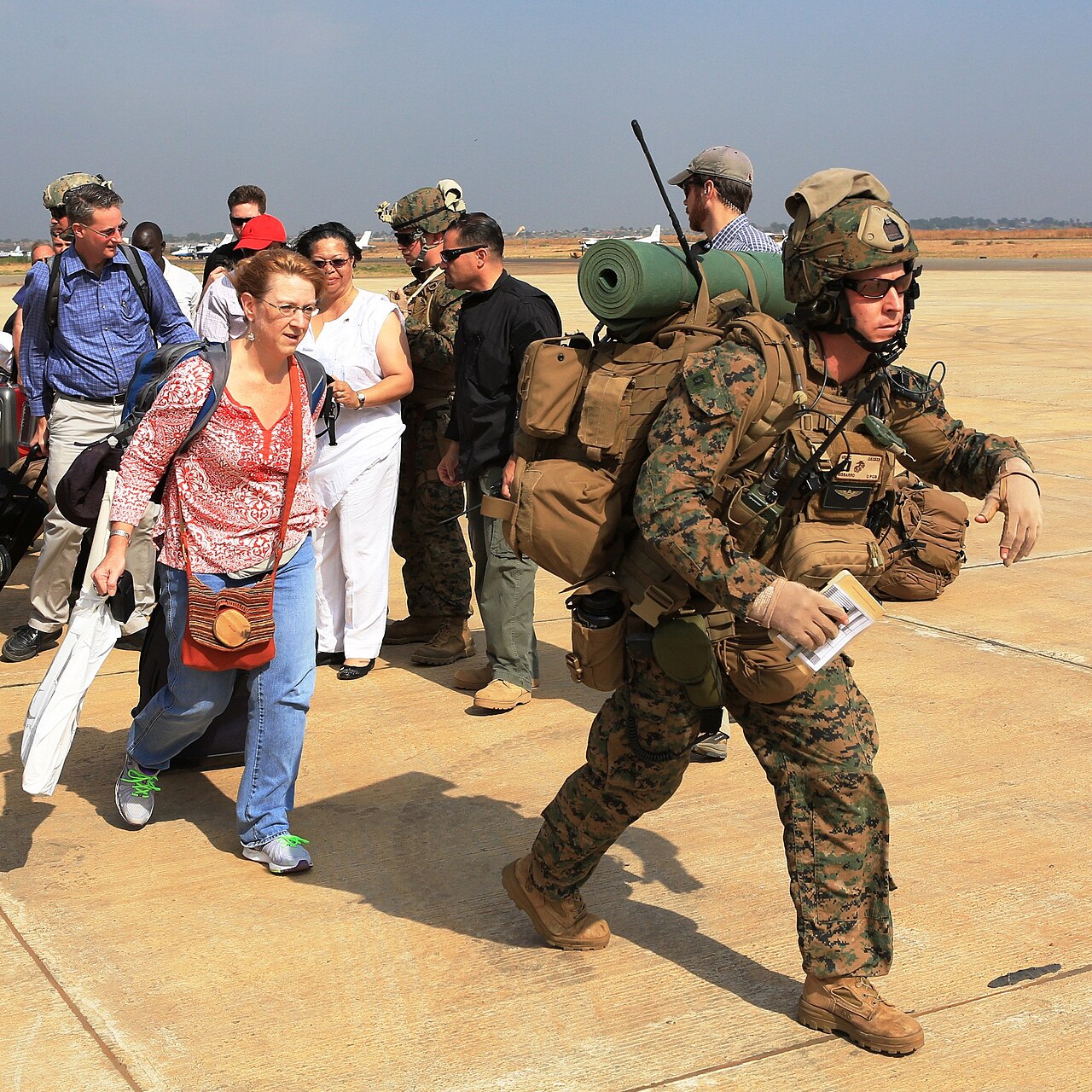
SSgt Robert L. Fisher III · Public domain
The conflict caused rampant human rights abuses, including forced displacement, ethnic massacres, and killings of journalists. Since the war's end, South Sudan has been governed by a coalition formed by leaders of the former warring factions, Salva Kiir Mayardit and Riek Machar.
- displaced
- more than 4 million
Lore & Background
Machar denied trying to start a coup and fled to lead the Sudan People's Liberation Movement-in-Opposition (SPLM-IO). Fighting broke out between the Sudan People's Liberation Movement (SPLM) and SPLM-IO, igniting the civil war. Ugandan troops were deployed to fight alongside the South Sudanese government, and the United Nations has peacekeepers as part of the United Nations Mission in South Sudan (UNMISS). Negotiations were mediated by IGAD, the African Union, the United Nations, China, the European Union, the United States, the United Kingdom and Norway. Kiir replaced Machar as First Vice President with Taban Deng Gai, splitting the opposition, and rebel in-fighting became a major part of the conflict. A rivalry between the President and former army chief Paul Malong Awan also led to fighting. On 22 February 2020, rivals Kiir and Machar struck a unity deal and formed a coalition government.
Reader's Guide
The South Sudanese Civil War was a devastating conflict that erupted from political and ethnic tensions within the newly independent nation. More than 4 million people were displaced, with about 1.8 million internally displaced and about 2.5 million fleeing to neighboring countries, especially Uganda and Sudan. The war's legacy includes ongoing and systemic ethnic violence, particularly between the Dinka and Nuer groups, and a coalition government formed by former rivals Kiir and Machar.
Did You Know?
- More than 4 million people were displaced, with about 2.5 million fleeing to neighboring countries, especially Uganda and Sudan.
Origins & the Road to War
The conflict traces its roots to Sudan's long history of military instability—twenty coup attempts since 1956 independence, punctuated by brief democratic interludes. The immediate trigger was a power struggle within the transitional government set up after the 2021 military coup. Tensions centered on whether the Rapid Support Forces, a paramilitary outfit born from the Janjaweed militias that al-Bashir had deployed against Darfuri rebels in 2003, would be absorbed into the regular army. General Hemedti, who had commanded the Janjaweed since its 2013 rebranding into the RSF, resisted this integration. When negotiations broke down, fighting erupted on 15 April 2023. The RSF struck government installations in Khartoum first, and the battle quickly consumed the capital before spreading westward into Darfur. Smaller armed factions—including SPLM-North splinter groups, the Tamazuj militia, and the Darfur Joint Protection Force—aligned with one side or the other, deepening the conflict's complexity.
Shifting Frontlines & the Fall of El Fasher
The war's military trajectory saw dramatic reversals. In the opening months, the RSF seized most of Darfur, pushed into Kordofan and Gezira, and captured large swaths of Khartoum, forcing al-Burhan's government to relocate to Port Sudan. By late 2023, the RSF held the initiative across multiple fronts. The SAF, however, clawed back territory in 2024, recapturing Omdurman and eventually retaking Khartoum by March 2025. Yet the most harrowing episode unfolded in El Fasher, the SAF's final Darfur stronghold. Under siege since April 2024, the city fell on 26 October 2025. What followed was, by one estimate, a massacre killing between 60,000 and 70,000 civilians in the city and surrounding villages; satellite imagery analysis suggested the death toll could reach 150,000, making it the single largest massacre of the twenty-first century. Despite these shifts, no durable ceasefire has held, and the war grinds on.
A Humanitarian Abyss
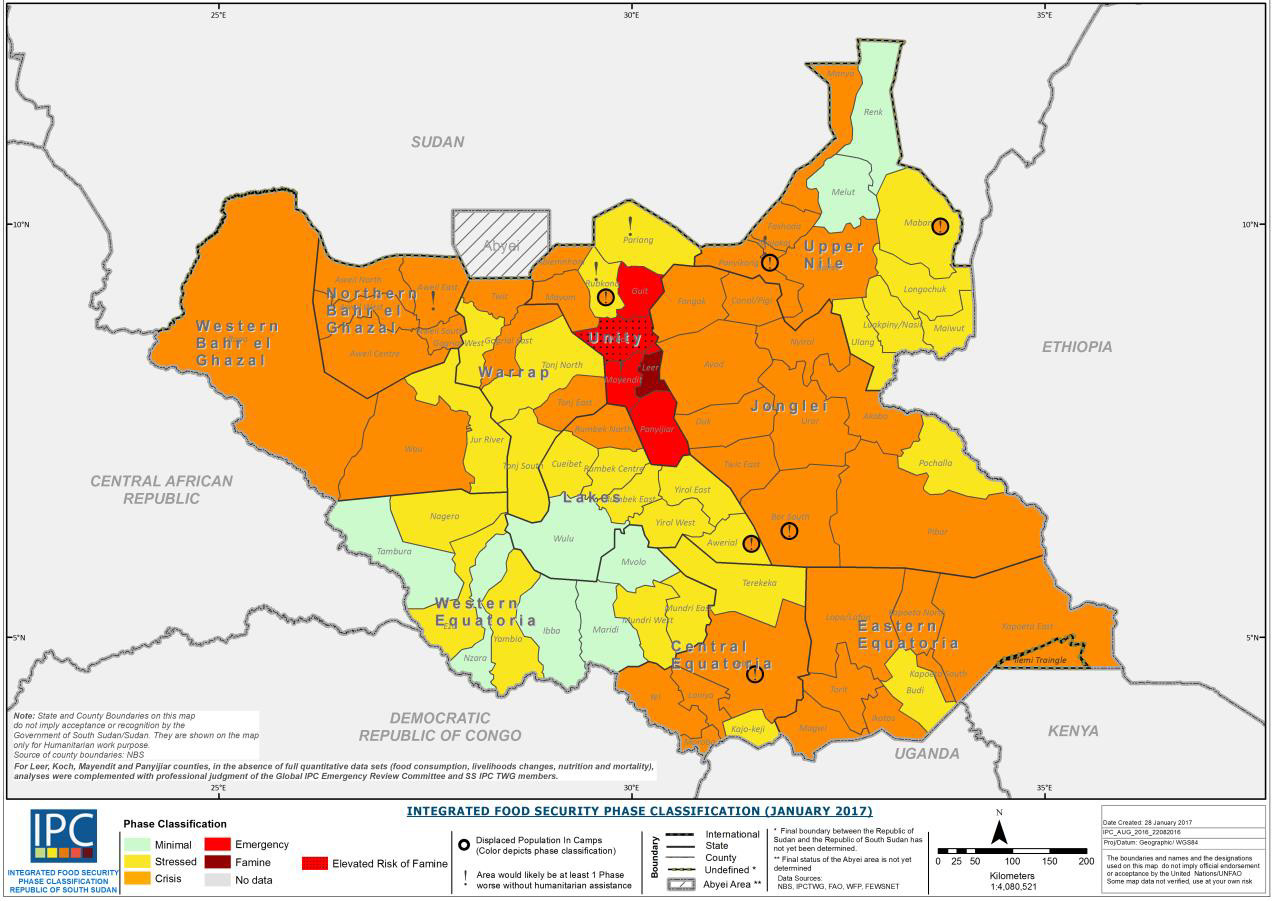
The human cost has been staggering. As of mid-2026, more than 14 million people have been forcibly uprooted, with 4.5 million crossing borders as refugees—one of the largest displacement crises in modern history. Famine has been confirmed in multiple regions, and 25 million Sudanese face severe food insecurity. Four million children suffer acute malnutrition, and 770,000 of them are at imminent risk of death. Hospitals have closed en masse, water and medicine are in critical shortage, and disease outbreaks spread unchecked. In Khartoum State alone, 61,000 people have perished, 26,000 of them direct victims of violence. Sexual violence has been pervasive. The UN's humanitarian under-secretary, Tom Fletcher, called Darfur the "epicenter of human suffering in the world." Half the population now requires urgent assistance, and the total death toll—spanning combat, starvation, and disease—remains impossible to fully quantify, with thousands still missing.
Foreign Entanglement & the Question of Justice
The war has drawn in a web of external actors. Russia, Turkey, Saudi Arabia, Iran, Egypt, Ethiopia, and the UAE have all exerted influence, while spillover from conflicts in the Central African Republic, Chad, and Libya compounds regional instability. The UAE has been particularly scrutinized: despite sanctions imposed by the US, UK, EU, and Canada on entities linked to both warring factions, the UAE was found to be shipping Chinese-made weaponry to the RSF in violation of those restrictions. The RSF largely finances its operations through gold exports routed to the UAE. On the justice front, the ICC has indicted RSF leaders for genocide, war crimes, and crimes against humanity stemming from their Darfur operations. On 7 January 2025, the United States formally determined that the RSF and allied militias committed acts of genocide, particularly in the killing of Masalit civilians. International calls have mounted for halting arms flows, protecting humanitarian workers, and supporting the flood of refugees.
Gallery
Frequently Asked Questions
Who governs South Sudan after the civil war?
The country is now led by a coalition government that unites the former opposing factions. Salva Kiir Mayardit and Riek Machar, who headed rival sides during the conflict, share responsibility in this post-war political arrangement.
More in African Conflicts And Colonialism 1-17
Spotted an error? Know more?
This is a living reference — every entry is fact-audited, and reader corrections feed straight into our audit queue. Suggest an edit · See this site's audit record